Heading into 2026, one thing is clear. Marketing and brand strategy involves the co-existence of hard-driven performance and deep, authentic storytelling.
The C-suite wants results like growth and revenue. But the kind of results they want can’t come without embracing changing consumer behavior, popular platforms like TikTok and Instagram, and technologies like Artificial Intelligence (AI) and machine learning (ML).
As expected, digital advertising will dominate. It’s projected to account for 73% of total ad revenue. This growth isn’t accidental: it stems from deeper insights into audience needs and improved adoption of analytics and measurement frameworks across teams.
In this playbook, we’ll explore how 2026’s highest‑performing marketing strategies merge authenticity and performance, reinforce brand identity, and deliver measurable growth.
We’ll also talk about navigating privacy‑first targeting, shifting platform dynamics, and the increasingly useful role of AI tools across every touchpoint.
Marketing and Advertising in 2026
Here’s a brief, data‑backed snapshot of the marketing and advertising space in 2026 to give you a quick glimpse into where things are going.
Growth and Spend Dynamics
- The global digital ad spend will continue to increase. And the global ad market is projected to hit the $1 trillion mark for the first time.
- 69% of this trillion-dollar ad spend will go towards digital ads.
- Programmatic advertising will make up four-fifths of the digital advertising expenditure.
AI and Infrastructure
- AI tools in marketing and advertising will be the norm. Platforms like Meta plan to automate ad creation and targeting fully by the end of 2026.
- Generative AI, analytics integration, and predictive frameworks will be central to marketing infrastructure. They’ll tie attribution, measurement, and content delivery into unified systems.
Consumer and Platform Shifts
- Consumers, especially Gen Z and younger cohorts, expect creative participation and remixable experiences, not passive ad exposure. This means fewer branded ads, more authentic user-generated content.
- Social commerce continues to grow. Platforms like TikTok, Instagram, and increasingly retail media are converting discovery into direct purchases.
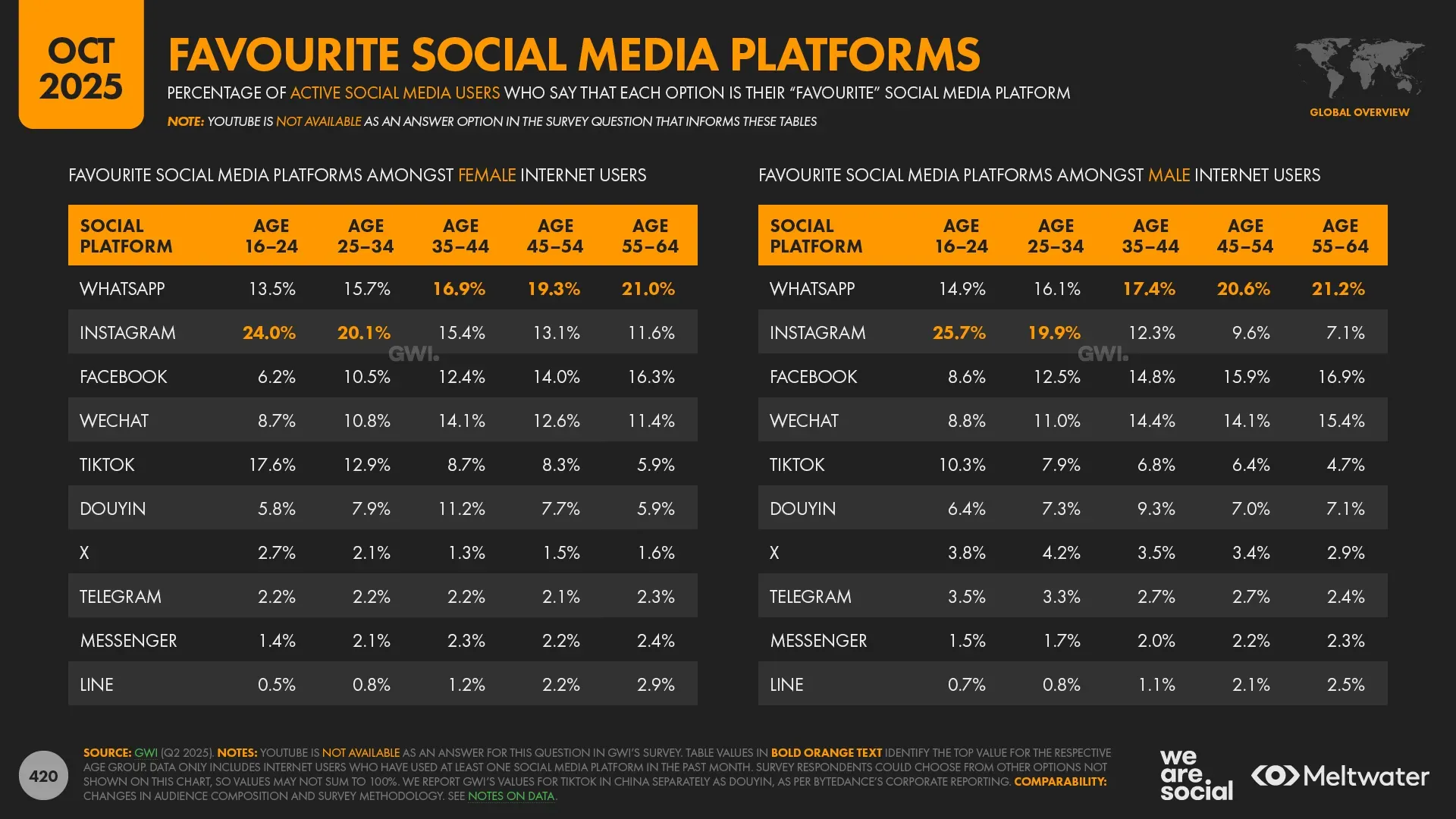
- Platform preferences vary by gender and age, with Instagram being the most popular for both male and female audiences under 34. Brands will need to adapt to those preferences when running social campaigns.
Content and Creative Evolution
- The creative space will combine storytelling with performance. This, in turn, will be driven by platform algorithms, short‑form formats (like TikTok and Reels), and modular content assets that scale across touchpoints.
- High‑impact experiences will require emotional resonance and brand authenticity, even as data informs execution.
Measurement and Attribution
- Analytics frameworks are going from static dashboards to real‑time decision systems that link brand investments to revenue outcomes and conversion performance across channels.
- Measurement and attribution will be increasingly important for AI agents in advertising, as they’ll heavily rely on data to make decisions (much like humans).
- Marketers will shift to a privacy-first approach to tracking and targeting, which will further advance first-party data, contextual targeting, and technologies like server-side tracking.
Here’s what Talia Wolf, the CEO of GetUplift, predicts when it comes to marketing analytics:
“We’re going to see data analysts and marketers use a lot of new tools to try to connect all the dots in the customer journey. But my biggest prediction and hope is that we’re also going to marry psychology and user intent to do so.”
The 2026 Consumer: Behavior and Expectations
In 2026, the consumer isn’t a passive target. They are informed, intentional, and hyper‑connected.
That reshapes how brands must approach marketing, storytelling, and customer acquisition. We’ve seen that brands succeed when they stop focusing only on transactions and start understanding why consumers buy, how they engage, and where they expect value across every touchpoint.
Here’s what you should know:
1. Customers Demand Value and Relevance
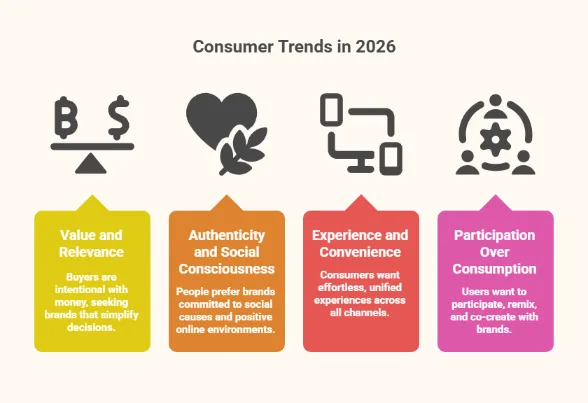
In our practice, we have observed buyers have become far more intentional with their money, which is hardly surprising given the economic uncertainty we saw in 2025. According to NielsenIQ, shoppers are weighing decisions more critically and gravitating toward brands that simplify decision‑making across channels.
2. Authenticity and Social Consciousness Drive Perception
A large share of people (69%) now prefer brands that demonstrate commitment to socially conscious causes. And 68% favor companies that create positive online environments.
We believe brands that earn trust are the ones that let values show up consistently in stories, social posts, and everyday communication. Our advice: say less, prove more.
3. Experience and Convenience Shape Behavior
If there’s one thing we’d strongly recommend, it’s removing friction wherever possible. Consumers increasingly prefer effortless, unified experiences across channels, whether that’s search, social, or post‑purchase moments.
The push toward “omnichannel journeys” and hyper‑personalized experiences is backed by research showing consumers want brands to meet them where they are while respecting their privacy and data choices.
4. Participation Over Passive Consumption
Platforms like TikTok, Instagram Reels, YouTube Shorts, and search anchors (including AI‑driven discovery) are reshaping consumer expectations around creative, shareable content.
According to experts at Google, users, especially young ones, want to participate, remix, and co‑create with brands. We suggest treating audiences as collaborators rather than viewers. It’s a mindset shift we’ve seen pay off repeatedly.
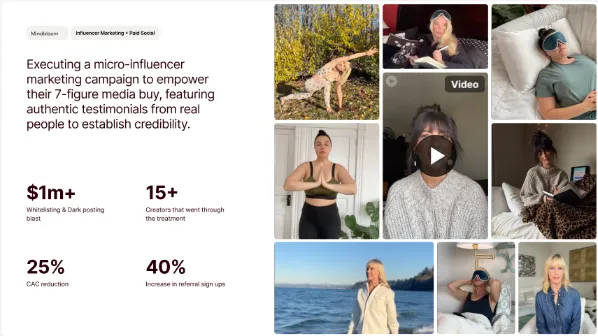
In our experience, user participation, particularly for ad creatives, can produce exceptional results. As an agency with a dedicated arm for user-generated content for organic and paid promotions, we’ve seen brands reduce cost and increase ROI on campaigns by simply working with authentic, relevant microinfluencers.
Below, you can see the real campaign results from one of our clients, Mindbloom, which clearly demonstrate how participation outperforms passive consumption.
In essence, the 2026 consumer expects brands to be relevant, authentic, and responsive. And as any seasoned marketer would tell you, understanding these expectations is the first step in the right direction.
Storytelling Matters More Than Ever
Storytelling isn’t something new. But it has become increasingly important today and equally challenging. Consumers sometimes interact with brands at multiple touchpoints, which can create newer challenges (that’s where sequential storytelling comes in handy).
Despite the challenges, storytelling is central to creating a strong brand identity that ultimately establishes customer loyalty. People want to see ads that tell a story.
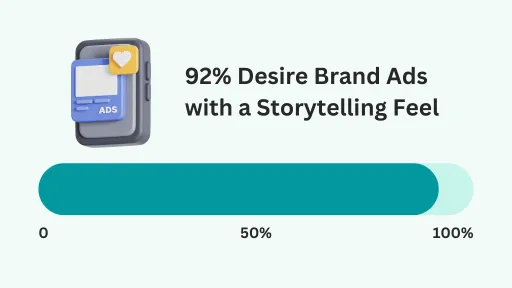
Storytelling drives results.
What we’ve consistently observed is that human, authentic content builds stronger emotional bonds.
Research supports this: content that feels human and authentic strengthens brand loyalty by roughly 20%. And 55% of consumers are more likely to remember a brand after engaging with a story than with just facts.
Narratives also activate more areas of the human brain than data alone. We’ve seen time and again that people retain narratives far better than statistics, especially when emotion is involved. Believe us, emotion is what helps brand attributes stick.
Emotional resonance achieved through stories helps embed brand attributes into memory. That’s the foundation of long‑term customer acquisition, repeat purchase behavior, and customer loyalty.
It goes without saying, but in 2026 and beyond, storytelling should form the core of your content strategy. And as we explored, that story can be told with the help of influencers and real users.
Storytelling example
For example, we produced a short UGC-style storytelling ad for one of our clients, Icelandic Provisions. It followed a woman who had always enjoyed dairy-heavy breakfasts until turning 28, when lactose intolerance suddenly changed everything.
One uncomfortable moment sent her rushing to the nearest bathroom, overwhelmed and frustrated. That’s when Icelandic Provisions’ non-dairy oatmilk skyr entered the picture. The story stayed honest and human, naturally weaving the product into a real lifestyle adjustment rather than a forced sales moment.
Pro Tip: For B2B brands, employees can be an invaluable asset for storytelling and for fueling engagement, conversion, and overall measurable impact with B2B buyers, who are typically more discerning and take longer to convert.
Performance Data Powers Strategy and Execution
In 2026, high‑performing brands don’t wing it; they orchestrate strategy with data at the center. Small or large brands alike will need to turn to historical performance data, industry benchmarks, and even real-time campaign data to pivot strategy and execution.
Gone are the days when teams would get unlimited budgets to create and run campaigns. The leadership now wants marketing budgets justified with clear, verifiable outcomes, which are generally revenue-linked. From our point of view, this shift has fundamentally changed how marketing teams plan, test, and scale campaigns.
McKinsey highlights the growing divide between Chief Marketing Officers (CMOs) and the rest of the C-suite.
As an agency that understands the nuances of marketing metrics, we know that data is the key to driving results that bridge that divide.
Performance measurement, with the right tech stack, can transform insights into growth and revenue. Trust us, data works best when it informs every stage of a campaign, from build and launch to optimization and reporting. It’s no longer an afterthought; it’s the operating system behind execution.
Tools like GA4, Adobe Analytics, and cross‑platform attribution engines allow brand teams to unify search, social, and email performance into a coherent measurement framework that speaks directly to revenue and profitability.
Of course, AI will be at the center of measuring the performance of both organic and paid marketing efforts. And that brings us to the next most important element of the 2026 brand playbook.
AI-Powered Branding in 2026: From Production to Performance
Production, testing, measurement, optimization; AI is here to influence every stage and aspect of branding. And at this stage, where AI models are practically embedded in every tool and platform, brands have no choice but to embrace it fully (and for their own good).
Adoption is already high. 69% of marketers had already integrated AI into their operations in 2024. The real change in 2026 is how AI behaves, with models becoming far more nuanced in tone, voice, and personality.
Here’s how brands can leverage AI going into 2026:
- Transforms workflow and productivity: Most high‑performing marketing teams should rely on at least one daily AI‑assisted, multi‑agent workflow. That can be for simpler tasks like ad creation or strategic tasks like narrative testing, optimization, and cross‑platform planning. Our advice is to use AI to remove bottlenecks.
- Hyper‑personalization at the next level: Brands turning to AI are reporting measurable performance gains. They see up to 47% higher click‑through rates, 22% better ROI, and campaign launch speeds up to 75% faster than traditional methods. We’ve observed that AI works best when it uses behavioral data and predictive modeling to adapt content in real time. Platforms like Google, Meta, and TikTok have already incorporated AI into their ad products.
- AI drives strategic insights and measurement: As AI systems ingest massive amounts of cross‑platform data, brands can use real‑time, predictive analytics that tie narrative performance directly to revenue outcomes. Tools that embed AI into analytics and attribution frameworks help uncover which creative elements move the needle and why.
- Content and creative at scale: Don’t think of AI as just automation. Think of it as amplification: it can be used to brainstorm ideas, create prototypes, and gather feedback quickly. As per Smartly’s report, 46% of marketers now use AI to scale creative outputs, and roughly 33% integrate AI across creative, media, and measurement workflows to reduce waste and improve ROI.
At 9AM, our experts take full advantage of the AI capabilities of tools like Figma to accelerate creative production and testing. With AI, we can quickly translate copy for localization, whip up landing pages, and produce flawless presentations.
Despite the expanding role of AI in branding, it’s important to mention that AI isn’t going to replace humans. Smart brands understand they still need the human touch and expertise to drive replicable results, especially when it comes to storytelling.
And that’s what we do at 9AM: we combine humans and AI to achieve remarkable results for our clients at lower costs.
AEO Becomes Central for Discoverability (SEO Still Super Important)
When it comes to discovery, there’s a new layer in town, and that’s answer engine optimization (AEO). The AI-embedded search engines have given rise to AEO, which is essentially optimization for AI-powered search. It’s all about getting citations by AI chatbots, search engine AI summaries, and voice answers from AI assistants.
In 2026, brands will need to optimize their content for AI and embrace the best practices for AEO for both brand discovery and reputation.
Why, exactly? The numbers make the case clear. According to a recent survey, 87% of adults in the US are reading AI search summaries, and 84% shopping with AI. Those numbers alone should convince you to invest in this area.
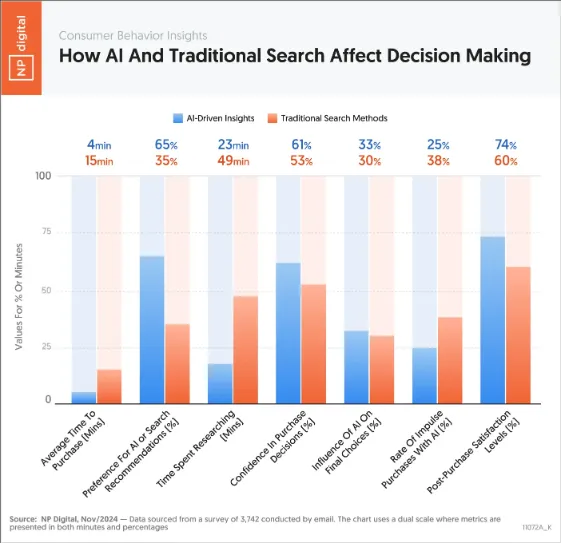
AI‑powered search and conversational interfaces like ChatGPT, Google’s AI Overviews, Perplexity, and other answer engines are influencing how people ask questions and how brands show up with answers. We’ve seen discoverability shift away from clicks and rankings toward direct citations inside AI-generated responses.
Instead of relying only on keyword positions, modern discoverability means being referenced directly in the answers AI delivers to users.
That raises an important question: Does that mean SEO is no longer relevant? Absolutely not.
SEO + AEO: Not Opposites, But Allies
SEO still matters; it builds organic authority and helps brands rank for traditional search traffic across websites, blogs, content strategy, and technical foundations. From our practice, strong SEO is what enables AEO to work in the first place.
In fact, AEO complements SEO by structuring content so that AI systems can extract answers, cite brand assets, and drive visibility without requiring a click. Trust us, brands that align SEO and AEO now will be far more visible in how search actually works in 2026.
Best practice: Optimized definitions, Q&A content, and schema markup help AI understand and surface your content as a trusted source.
Compliance and the Push for Privacy-First Targeting
As we move deeper into 2026, compliance and privacy‑first targeting are no longer niche considerations tucked into legal briefs. They are central strategic requirements for any brand serious about delivering marketing, driving customer acquisition, and maintaining trust with consumers.
The shift toward privacy compliance, data control, and transparent targeting is reshaping how campaigns are executed across platforms like Meta, Google, TikTok, and beyond.
Why privacy‑first matters for strategy and targeting?
Consumers increasingly expect transparency about how their data is used and control over it. And they’re willing to reward brands that honor that expectation. From everything we’ve observed, brands that respect these boundaries earn stronger engagement and long-term loyalty.
Take third-party cookies. Nearly two–thirds of consumers surveyed said they want Google to eliminate third-party cookies. Other major browsers, like Firefox and Safari, already have.
In short, we’re heading to a privacy-first, cookieless future of marketing.
Many brands are already shifting to compliance-friendly targeting practices with first-party data, information they collect themselves with user consent. In any case, that’s far more accurate and useful than third-party data.
Then there’s contextual targeting, where, instead of tracking data, you use contextual signals like location, time, website niche, etc., to show ads that feel relevant to users. We’ve watched this approach deliver strong results when relevance is designed thoughtfully rather than forced.
Recent research indicates that over 72% of global marketers are rebuilding their strategies around privacy‑first data models, with a majority now relying on first‑party data as the backbone of targeting and personalization.
If you’re not already collecting data directly from your users, it’s high time you did. Regulations for data protection in Europe are already stringent and spreading across North America, South
Content Architecture: A New Full-Funnel Model
From our point of view, content only works when it moves people forward. You need an architecture that guides customers from unknown to loyal, aligned across narrative, marketing objectives, and performance data.
A full‑funnel model structures stories and assets around the stages of the customer journey, from awareness to conversion to long‑term retention.
Also, this approach ensures that every asset has a purpose and ties back to measurable outcomes like customer acquisition, engagement, and profitability. But more importantly, these connected assets help you establish a brand story across different stages and channels.
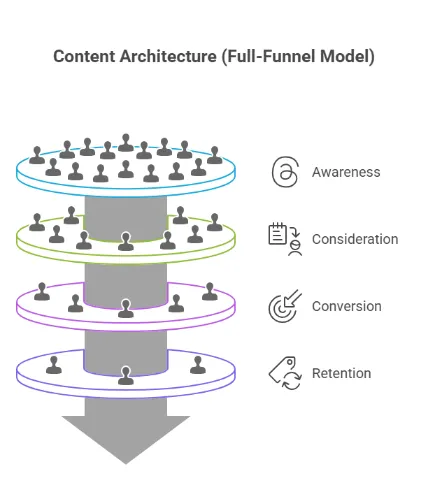
Here’s how modern content architecture breaks down across the funnel:
Awareness (Narrative‑First)
At the top of the funnel, your goal is to introduce your brand identity and spark curiosity in a crowded market.
- Formats such as narrative‑driven blog posts or short‑form social content help increase organic reach and embed your story in memorable ways.
- Brand films, UGC storytelling, and cultural hooks spark emotion and build recognition across platforms like TikTok, Instagram Reels, and LinkedIn.
A good example of this approach is a story-led UGC TikTok ad we created for Bumble. Instead of pushing features, the ad followed a real moment, two people matching, taking a small risk with an unconventional opener, and turning it into a memorable first date.
By framing the experience as a relatable story, the content sparked emotion, felt authentic, and naturally connected Bumble to the excitement of meaningful connections rather than dating mechanics.
At this stage, we suggest tracking reach, impressions, and engagement. These are early indicators that your brand is being noticed and felt.
Consideration (Hybrid Storytelling + Performance)
Once awareness exists, your content strategy must deepen relevance and move prospects closer to action. This phase blends storytelling with tangible, utility‑oriented pieces.
- Product demos, founders’ stories, and social proof, such as testimonials and reviews, are the typical go-tos.
- Email sequences and gated guides help educate, answer questions, and establish trust.
- Hybrid formats, like in‑depth webinars or case studies, show real outcomes while keeping narrative threads alive.
The goal is to nurture interest with value‑led content that feels both informative and emotionally engaging.
Conversion (Performance‑First)
Here, content turns intent into action. Assets are lean, focused, and measurable:
- Conversion‑first formats include short‑form ads, optimized landing pages, and DPA creative that highlight benefits and reduce friction in the checkout flow.
- Behavioral nudges, such as tailored CTAs in emails or exit‑intent offers, improve conversion rates and tie directly to performance metrics like click‑through, add‑to‑cart, and purchase rate.
At this stage, narratives are tight, clear, and aligned with intent signals because the audience already knows you. A coordinated measurement framework ensures every piece of content contributes to revenue and ROI.
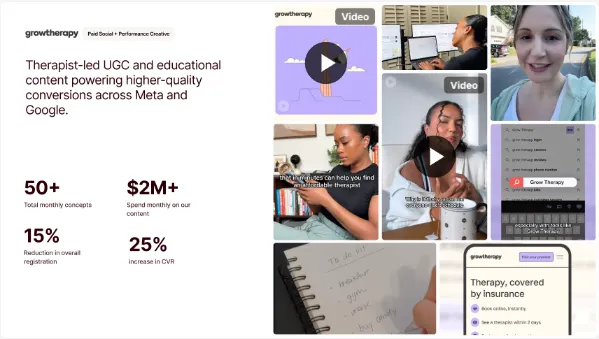
Here’s an example of how we injected creator-led content into conversion-focused ads for Grow Therapy, and the results speak for themselves.
Retention (Community Storytelling)
The funnel doesn’t end after purchase. The smartest brands build ongoing content experiences that keep customers engaged and loyal.
- Post‑purchase content, from lifecycle email flows to community platforms or loyalty circles, pushes for brand advocacy and repeat purchases.
- Value‑led stories and personalized interactions build affinity and increase lifetime value.
This loyalty focus reinforces why a full‑funnel architecture matters. As you can see, each stage feeds the next while strengthening your overall customer base.
That’s your blueprint for 2026.
Marketing Channels That Will Dominate 2026
Now, let’s talk specifics for the digital channels that matter the most. Remember, each channel has its own strengths, target audiences, and optimization techniques.
What we’ve consistently seen is that brands that understand where their audiences spend time, and how they consume content, are the ones that unlock audience overlap and scalable revenue.
TikTok & Reels: Culture‑Driven Discovery
Short‑form video continues to be the engine of cultural discovery and brand performance.
Your ecommerce playbook should definitely have TikTok and Instagram for both organic and paid reach.
Here’s the gist of it:
- Short‑form formats are now the centerpiece of many social strategies because they accommodate snackable yet memorable brand moments that build deep brand connections early in the funnel.
- Research shows that short‑form video remains the most relevant content type for future strategy, with nearly 39% of marketers prioritizing it for 2026.
- TikTok, in particular, plays a significant role in consumer research and purchase journeys, with data indicating that over 54% of consumers turn to TikTok when researching products.
YouTube & Shorts: The Storytelling Conversion Engine
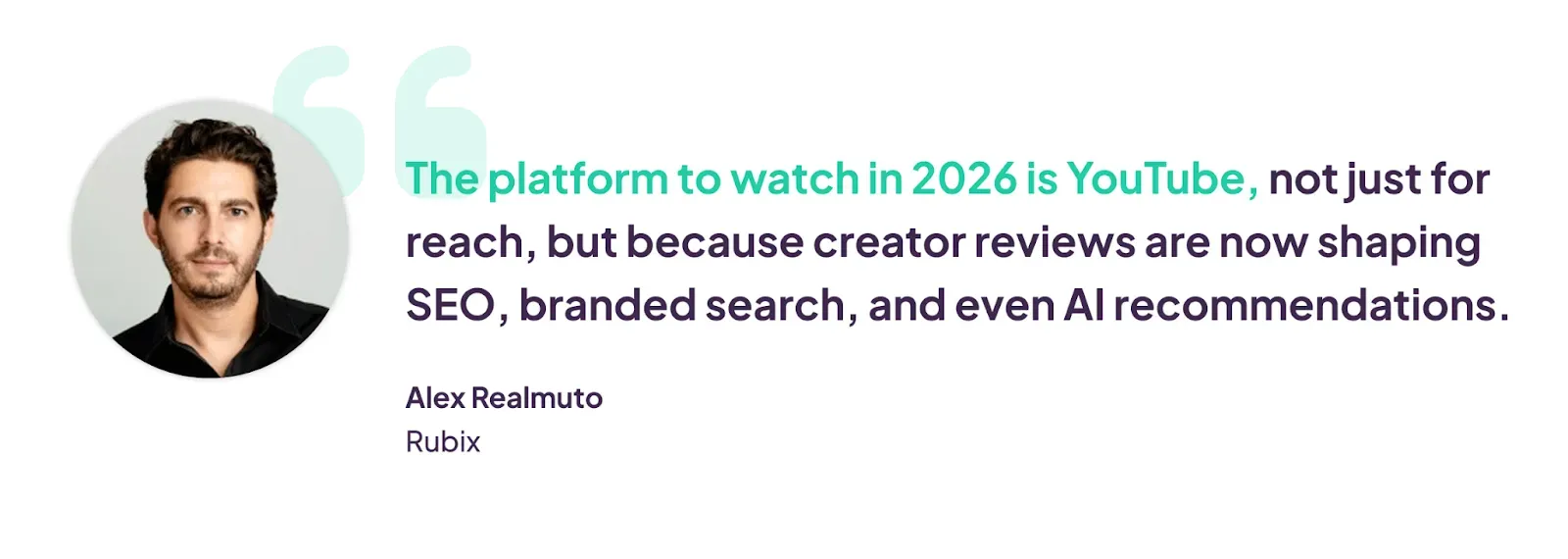
YouTube’s expansive reach–both in long‑form and shorts–makes it one of the most impactful channels in the 2026 media mix. Here’s why it’s so important.
- YouTube’s standard video ecosystem reaches over 2.5 billion users (the highest video consumption across age groups).
- YouTube Shorts, specifically, serves as both a discovery and conversion engine, with short vertical videos generating massive engagement that’s competitive with TikTok.
For brands, YouTube’s dual role–broad reach + detailed conversion tracking–makes it ideal for hybrid creative strategies that start with narrative and end in measurable action. And experts agree.
Retail Media: Where Brand Stories Meet Shelf Conversion
Retail media networks (RMNs) like Walmart Connect, Amazon DSP, Target Roundel, and others are becoming essential channels for brands looking to unite brand storytelling with purchase conversion.
Forecasts suggest global retail media ad spend will approach $100 billion+ by 2028 as advertisers chase audiences closer to the point of purchase.
This channel powerfully intersects story (e.g., reviews, product demos, editorial recommendations) with performance. Also, teams get direct visibility into revenue impact through first‑party data.
Streaming & CTV: Performance Storytelling at Scale
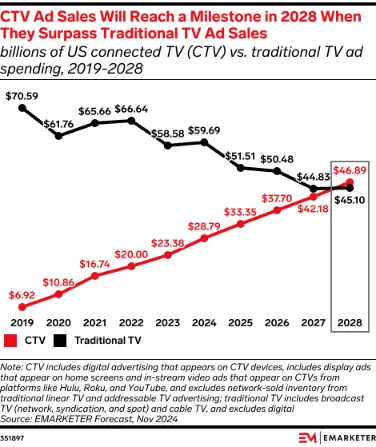
Connected TV (CTV) and streaming platforms continue absorbing share from traditional linear TV.
A surge in CTV ad spend reflects the reality that consumers expect cinematic‑quality brand stories in their living rooms.
Streaming platforms now enable brands to marshal narrative assets (e.g., episodic creative, short documentaries, brand films) into performance‑measurable placements.
But CTV excels when combined with mobile and social strategies. That’s particularly important for brands targeting broad consumer segments across touchpoints.
Community Platforms (Discord, Telegram, Reddit): Deep Loyalty Loops
Beyond broad reach channels, community platforms are where brand affinity and advocacy thrive.
Platforms like Discord, Telegram, and Reddit will help you create deep brand connections through intimate, participatory spaces that reward authenticity, real‑time interaction, and user‑generated feedback.
These channels feed into retention storytelling (early access groups, exclusive content, and direct dialogue with brand advocates), which drives loyalty and repeat purchase behavior.
Community platforms function as narrative ecosystems that activate word‑of‑mouth, testimonials, peer comments, and affinity with remarkable efficiency.
Podcasts: Opinion Shapers
Podcasts remain durable and influential channels for thought leadership and narrative depth. They’re particularly useful for B2B brand building, with authoritative discussions involving founders, employees, and industry experts as guests.
Around 160 million people in the US consume podcasts each month.
Podcasts are ideal for storytelling that educates, entertains, and builds trust, especially when paired with guest appearances, host endorsements, or narrative content that resonates with niche communities.
How Agencies Like 9AM Can Power Branding, Marketing, and Advertising
A reliable digital marketing agency can be a strategic growth partner for brand leaders and brand teams. They balance storytelling with performance execution and provide a measurable growth strategy.
As we discussed, branding and marketing are going through the motions in 2026, with changing consumer expectations, stricter privacy laws, and the proliferation of AI tools. Doing it all on your own can be quite a challenge.
That’s why many brands turn to agencies like ours to navigate branding, marketing, and advertising and take advantage of our expertise in this space. We’re on top of the trends, the changes, and the technology that powers it all.
Business Wire highlights that in 2026, many agencies are evolving into partners that guide brands on AI‑augmented storytelling, measurement, and reputation management. They blend creative narrative with data‑driven planning.
And that’s exactly what we offer here 9AM.
As a performance marketing agency that manages over $250 million in ad spend, we’re all about putting the money to work for brand goals, whether that’s product sales, service sign-ups, or simply breaking into a new market.
We’ve worked across various verticals in industries including ecommerce, CPG, health & wellness, and SaaS. And our efforts are powered by a strong AI-enabled tech stack and some really smart humans who work closely with brands to understand the required impact from campaigns.
From projects to ongoing marketing efforts, we’ve helped brands like Hurom, Nielsen IQ, EVRY Jewels, and Booksy tap niche creators to get their message across to audiences while keeping customer acquisitions down.
How to Win With Branding in 2026 and Beyond
One truth is clear: the brands that will lead are those that master the intersection of storytelling and performance. This playbook outlines how forward‑thinking brand teams can futureproof their growth strategy with the help of AI, by building privacy‑first infrastructure, and activating content across full‑funnel campaigns.
And don’t forget to meet rising consumer expectations for authenticity, personalization, and real value.
Whether you're refining your brand identity, scaling through channel expansion, or optimizing for attribution and profitability, the path to long‑term success lies in strong connections, agile execution, and creatives that resonate.
And an agency partner like 9AM can help make all that happen. Book a strategy call today!
FAQs
What actions should brands take to ensure their marketing is futureproof?
Futureproof marketing by investing in first-party data, adopting AI-driven analytics, prioritizing customer experience, and adapting to new platforms. Brands should create agile strategies that evolve with technology, privacy laws, and consumer behavior to stay competitive in a dynamic digital landscape.
How will AI impact marketing and advertising?
AI will impact marketing and advertising by automating content creation, personalizing customer journeys, improving targeting, and enhancing campaign performance. Marketers will rely on AI to optimize budgets, analyze real-time data, and deliver predictive insights that increase ROI and reduce manual workload.
What are the most important channels for B2B marketing in 2026?
The most important channels for B2B marketing in 2026 will include LinkedIn, email marketing, content marketing, podcasts, and webinars. Account-based marketing platforms and data-driven CRM tools will also drive targeted outreach, while SEO and thought leadership remain essential for brand visibility and lead generation.
What will be the major trends in media buying in 2026?
Major media buying trends in 2026 will include AI-optimized bidding, contextual targeting, cookieless tracking solutions, and cross-platform measurement. Advertisers will shift toward real-time optimization, programmatic audio, and CTV, and ethical data usage to align with changing consumer privacy expectations.
Is it worth working with a digital marketing agency?
Working with a digital marketing agency is worth it when you need expert strategy, faster execution, and measurable ROI. Agencies bring specialized tools, industry knowledge, and scalability that help businesses grow online while reducing the trial-and-error cost of in-house marketing.
What does 9AM specialize in as a performance media agency?
9AM specializes in performance-driven digital marketing, focusing on scaling revenue profitably across paid media, creative, analytics, and full-funnel growth strategy.
How does 9AM approach performance marketing differently?
From our point of view, performance only works when strategy, creative, and measurement operate together. 9AM combines media buying, performance creative, and advanced attribution to drive measurable ROI, not vanity metrics.
Does 9AM support creative and UGC production?
Yes. 9AM runs systematic creative strategy and UGC production programs, including creator sourcing, whitelisting, testing frameworks, and rapid iteration to identify and scale winning ads.