
It’s the end of an era, really, at least for marketers and advertisers. Third-party cookies, which have powered digital ads for years, seem to be on the way out. And their departure is ushering in a new era of privacy-first in advertising.
The term “cookies” may feel mundane, but the implications of their use for advertising, user behaviour measurement, and brand strategy are profound. And some marketers aren’t prepared.
An Adobe study found that 75% of marketers are still relying on third-party cookies, even as a ‘cookie-less future’ stares us in the face.
The reality is that one way or another, advertisers will need to move away from cookies. And only those who prepare in advance and adopt the right strategy will make it in the privacy-first, heavily regulated world.
That’s what we’ll cover in this piece: strategies to make it in a post-cookies advertising space.
TL;DR: The Cookie-Less Future: What Marketers Need to Know
Most browsers have or are phasing out third-party cookies due to growing privacy concerns, stricter privacy laws (GDPR, CCPA), and user demand for more control over their data.
In this new cookieless future, businesses must rebuild their digital advertising strategies around first-party data, zero-party data, privacy-first tracking, contextual advertising, and tools like server-side tracking, conversion APIs, and CDPs.
Marketers who adapt early, by strengthening data infrastructure, rethinking measurement, and using compliant technologies, will gain an advantage as behavioural targeting declines.
The future of advertising belongs to brands that respect consumer privacy, earn trust, and shift from third-party cookies to owned data, actionable insights, and privacy-smart adtech solutions.
nine.am can be the right partner; if you want to move away from cookies and adopt new ways to target audiences with ads that deliver.
What Is Cookie-Less Advertising?
Cookie-less advertising refers to techniques, technologies, and strategies used by advertisers to deliver and measure ads without relying on traditional third-party cookies. This type of advertising targets ads without using browser cookies that typically track user data and behavior.
In practice, this means that instead of dropping external cookies to follow a user across domains, brands are shifting to privacy-focused tools.
“Cookieless” doesn’t necessarily mean “no data” or “no targeting.” It means moving to privacy-first tracking, new measurement models, and alternative advertising strategies that respect user privacy, comply with laws.
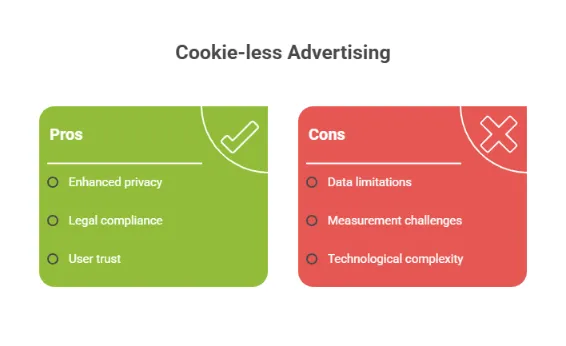
Cookies have been a major component of targeted digital advertising for a long time. Over 40% of websites worldwide use cookies to track user activity.
It was, and to some extent, still is, an effective way to target and retarget potential customers online. But for various reasons, the use of third-party cookies is slowly being phased out. This means, in the near future, advertisers will have no option but to find alternatives.
Before we dive into the reasons behind this shift, let’s quickly look at what different parties of data mean, as that will be important to the discussion.
Quick Word: First, Second, and Third-Party Data
Data is incredibly important for targeting in paid digital media. There are different parties to this data, depending on who is collecting it and how.
Let’s take a look and compare them:
- First-party data: This is data you collect directly from your users, consumers, or customers via your own channels, such as website visits, mobile app interactions, purchases, CRM records, user surveys, or loyalty programme engagement.
- Second-party data: This data is essentially another organisation’s first-party data that you acquire through a trusted partnership. It’s less commonly talked about than first or third party, but it is growing in relevance.
- Third-party data: This is data purchased from external aggregators, brokers, or adtech platforms that have collected data across multiple websites or platforms, using cookies (hence third-party cookies) or other tracking mechanisms.
Here’s a detailed comparison of the three types of data in advertising, their privacy risks, pros, and cons:
| Data Type | Level of Control | Typical Use Cases | Privacy & Compliance Risk | Strengths | Limitations |
|---|---|---|---|---|---|
| First-Party Data | Very high (you control consent, collection, and storage) | Personalization, behavioral insights, segmentation, retention, attribution | Lowest risk (aligns best with regulations like GDPR and CCPA because of consent) | Accurate, consent-backed, cost-efficient, durable in cookieless environments | Requires a strong data infrastructure (CDP/CRM), may have limited scale |
| Second-Party Data | Medium | Audience expansion, enrichment, and collaborative campaigns | Moderate risk (must ensure partner’s collection is compliant) | Higher accuracy than third-party; scalable through partnerships | Requires legal frameworks; integration overhead; dependent on the partner’s data quality |
| Third-Party Data | Low (another party collects and controls) | Broad targeting, prospecting, retargeting, and programmatic advertising | Highest risk (increasingly restricted by browsers and privacy laws) | Scalable, plug-and-play | Declining availability (cookie blocking), lower accuracy, and major compliance risks |
Why Are Third-Party Cookies Being Phased Out?
Third-party cookies are gradually being phased out mainly due to privacy concerns from users and increasingly stringent data protection regulations worldwide.
Although third-party cookies were once foundational to digital advertising, their use by businesses online has come under fire in the past few years. As the awareness about this technology grew, so did the concerns and frustrations.
The demise of the third-party cookie isn't due to a single event, but rather a "perfect storm" of three converging forces: consumer demand, regulatory pressure, and browser enforcement.
1. Changing User Expectations
The primary driver behind this shift is a fundamental change in user sentiment. Internet users are becoming increasingly aware and uncomfortable with how their data is harvested.
Users are tired of the "surveillance economy" where an ad for a product they viewed once follows them to every other site they visit.
For instance, in a Deloitte survey, 67% of respondents said they’re concerned about the privacy and security of their data on phones.
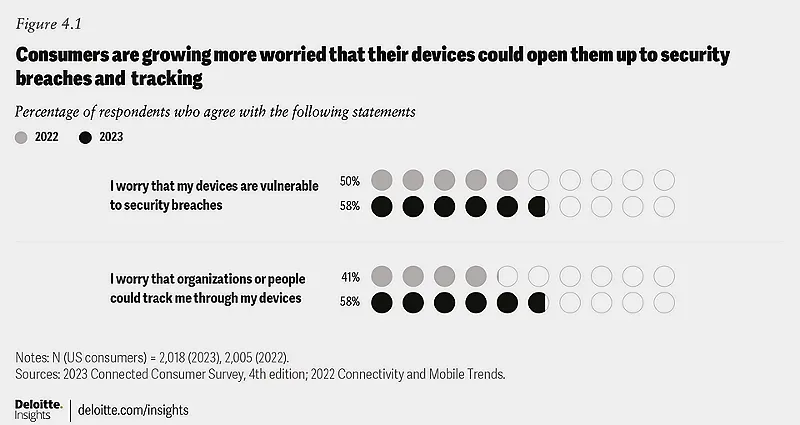
Studies and surveys consistently show that a vast majority of consumers feel they have lost control over their personal data. They are demanding transparency regarding who is collecting their information and how it’s being used.
2. The Regulatory Hammer
Governments have responded to these concerns with stringent privacy laws that make the unrestricted use of third-party cookies legally risky and operationally difficult.
In Europe, the General Data Protection Regulation (GDPR) set a new global standard by requiring explicit, informed consent. Websites can no longer assume consent. Instead, they must ask for permission when using third-party cookies, and visitors have the choice to deny all or select cookies.
This effectively broke the seamless, invisible tracking that third-party cookies relied on.
In California, the California Consumer Privacy Act (and its expansion, the CPRA) gave residents the legally enforceable right to know what data is being collected and, crucially, the right to opt out of the sale of their personal information.
Other places around the world are also adopting similar regulations, which threaten the existence of non-consensual tracking technologies.
3. Browsers Blocking Access
Browsers like Mozilla Firefox and Apple Safari have blocked third-party cookies by default. Firefox did it through its Enhanced Tracking Protection. And Apple was actually the trailblazer with Safari using Intelligent Tracking Prevention.
Again, this was partly in response to growing user concerns around privacy.
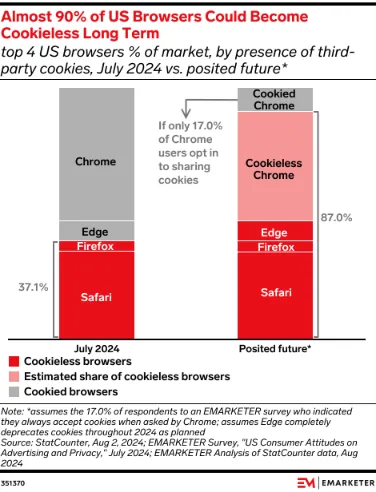
Google Chrome, which has an over 71% browser market share, has delayed full deprecation. IT first announced that third-party cookies would be phased out, only to take a U-turn on the decision. However, it acknowledges the need to give users more control over tracking and has introduced tools for cookie-blocking. That means a full phase-out could be on the cards.
What Does a Cookie-Less Future Mean?
A cookie-less future in advertising and marketing doesn’t mean the end of data collection or tracking. It only means that cookies may no longer be feasible or usable for collecting data from users. However, there are other ways to get the data you need that respect privacy and comply with regulations.
For you and your digital marketing team, this means fewer guaranteed segments, less deterministic attribution, and potentially higher costs to trace conversions.
At the same time, your measurement frameworks must evolve. You’ll shift away from cookie-based models and toward architectures built on first-party data, cookieless cohorts, privacy-friendly identifiers, conversion APIs, and server-side tagging (all of which we’ll discuss in the next section).
Google was even working on what could have been the replacement of these third-party cookies. Its Privacy Sandbox project was the industry’s primary candidate for a post-cookie world. It aimed to replace invasive tracking with privacy-preserving APIs.
The initiative introduced tools such as the Topics API (for interest-based advertising without individual tracking) and the Protected Audience API (formerly FLEDGE, for on-device remarketing), designed to enable advertisers to target cohorts rather than specific users.
However, this massive rearchitecture of the web faced significant hurdles, including regulatory scrutiny from the UK’s CMA, technical complexity, and low adoption among publishers. In a decisive shift, Google officially retired most of these ad-tech APIs in October 2025.
For now, it seems Google, for one, is sticking with user control over a complete end to third-party cookies. But that could change at any point.
Emarketer predicts that almost all browsers (87%) will go cookie-less in the future.
So, again, it’s better to be safe than sorry and not risk getting stranded when cookies are gone all of a sudden.
How to Adapt to a Cookie-Less Advertising Future: 6 Effective Strategies
As a CMO or head of digital marketing at a consumer brand, your goal is to maintain performance while complying with privacy regulations such as GDPR and CCPA.
Below are key strategies that provide a path beyond third-party cookies and how you can implement them in your organization.
1. Build a Zero-Party and First-Party Data Engine
Zero-party data is what consumers intentionally share with you. First-party data is what you directly collect from your visitors with their consent.
Here are some effective ways to collect first-party data:
- Email newsletter sign-ups: Offer valuable content in exchange for an email address.
- Gated content: Use a form fill to download eBooks, whitepapers, or reports.
- Account registration: Encourage users to create an account for faster checkout or personalized features.
- Surveys and feedback forms: Ask customers directly about their preferences, satisfaction, or needs.
- Purchase history: Analyze transaction data to understand buying habits and product preferences.
- Loyalty programs: Track member activity and redemptions to gauge engagement and interests.
- Interactive quizzes and polls: Use fun, engaging content to capture user preferences (e.g., "What's your skin type?").
- Event registrations: Collect details through sign-ups for webinars, workshops, or conferences.
- Customer support interactions: Record insights from help desk tickets, live chats, and support calls.
- Mobile app usage: Track in-app behaviors and preferences if you have a dedicated application.
Research shows that 77 % of U.S. marketers already use first-party data as a cookieless solution, and 82 % collect zero-party data.
First-party data is the obvious contender to third-party cookies. Although it can be a bit difficult to collect, it proves to be the most valuable for personalization. That’s what 78% of businesses expressed in the State of Personalization survey by Twilio.
Implementation tip: Map every touchpoint where you collect user intent or behaviour, ensure you have consent mechanisms in place, integrate your site/app analytics into your CDP, and activate segments in your adtech tool-chain.
2. Shift Your Focus to Contextual Targeting
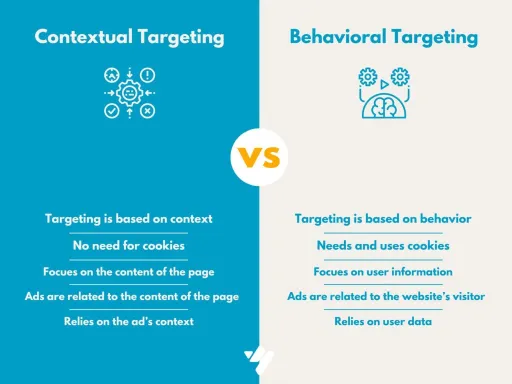
Cookies were about behavioral targeting. With rising privacy concerns, marketers are shifting to contextual targeting.
Contextual advertising involves placing ads aligned to the content context rather than individual browsing history.
And it works well.
One study found that 69 % of consumers were more likely to notice an ad when it was relevant to the content they were viewing.
To tap into this strategy, you can use contextual-targeting platforms (especially those using AI or NLP to analyze page themes) to serve ads in relevant environments.
Advance your media plan by shifting budget toward contextual ad inventory (digital audio, Connected TV, in-app) with high thematic relevance.
You’ll need to update your media-planning workflows to include “context desk” line items, measure context-based placements separately from behavioural ones, and monitor how performance (e.g., click-through-rate, conversion rate) compares.
Many advertisers are still only beginning this transition, so early adoption can give you a competitive edge.
3. Implement Privacy-First Tracking With Server-Side Tagging & Conversion APIs
Server-side tracking and conversion APIs are some of the latest privacy-first methods marketers are using.
Unlike traditional client-side tracking, where data is sent directly from the user's browser to an analytics vendor, server-side tracking routes the data through a proprietary server, such as a cloud-based Customer Data Platform (CDP) or Tag Manager. This setup gives the business full control over what data is collected, how it's standardized, and where it's sent.
Conversion APIs (like Meta’s Conversions API or Google’s Enhanced Conversions) are the key mechanism for this process. They allow the business's server to send event data (purchases, sign-ups, etc.) directly to advertising platforms via a secure, authenticated connection.
Here’s what to do: run a pilot of server-side tagging (e.g., via Google Tag Manager Server-Side) and/or conversion API for your paid-media stack (such as Google Ads).
Measure lift: how much of your conversion data is lost versus retained after removing reliance on third-party cookies? Use these insights to optimise your tracking infrastructure and gradually shift to privacy-first models.
4. Centralize Data With Customer Data Platform (CDP) and Operationalize CRM Insights
We’ve already mentioned CDP several times, as it will be instrumental in the post-cookie era. You could theoretically rely on a CRM, too, especially if you’ve invested in a reliable platform and have ample data to go off of.
But for a consolidated approach that combines and aggregates data from different sources, you’re going to need a CDP.
Once you have that, your next strategic lever is consolidating data from your CRM, first-party analytics, and zero-party sources into the platform. That will enable activation and measurement.
By owning this “data platform”, your brand maintains control and can reduce reliance on external ad networks.
Action steps
- Audit your current CRM + analytics + adtech stacks.
- Map how first-party behavioural data flows into your CDP.
- Determine how you will feed your CDP segments into ad-buying platforms and measure results (for example, lift in average order value, retention rate).
- Ensure governance, consent, and security are baked in.
5. Use User-Generated Content to Replace Behaviour-Based Personalization
This isn’t exactly an alternative to third-party cookies or a tracking strategy. Using generated content (UGC) can complement the tracking alternatives used and make your ads more targeted in terms of brand messaging and relevance.
UGC offers authenticity, drives engagement, and sidesteps heavy reliance on behavioural targeting via cookies. It has 28% more engagement than branded content.
Execution ideas:
- Encourage reviews, photos, videos, and testimonials
- Integrate UGC into paid ads, product pages, and recommendation flows, entirely aligned with user privacy
- Run UGC-driven campaigns to collect zero-party preference data
For example, an eCommerce retailer might run a “share your style” campaign, collect zero-party data about what customers like, and use their UGC in dynamic ads.
At nine.am, we’ve seen great results with UGC as ad creatives. We created a micro-influencer-powered UGC strategy for beverage brand Mogu Mogu to break into the US market. With just two centers per engagement, we were able to reach 30 million accounts across social media platforms.
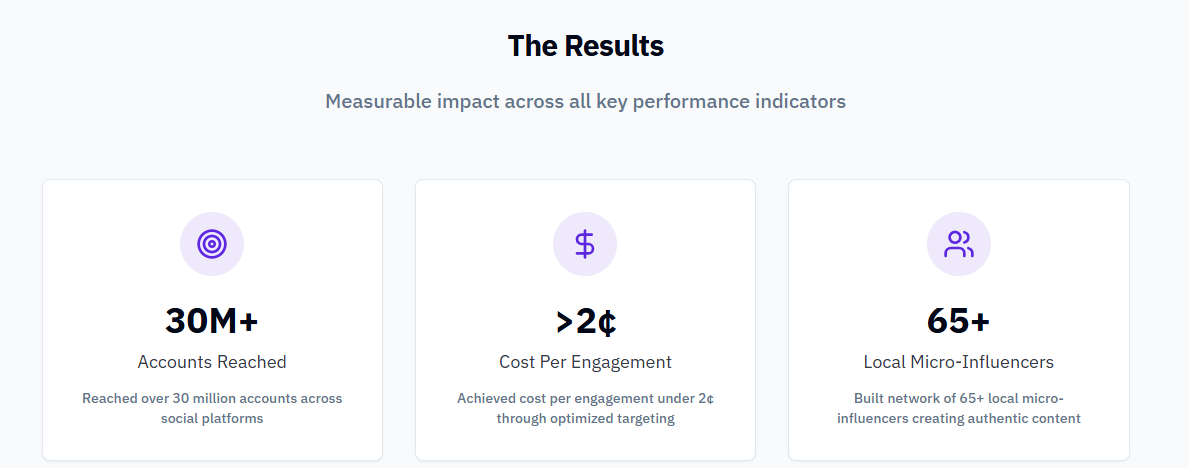
Compare that with the cost and impact of cookie-based ads on websites, and you can see just how powerful such an approach can be for both awareness and conversion campaigns.
6. Activate Dynamic Creative Optimization Using Your Own Data
Finally, invest in dynamic ad-optimization tools that use your own data (first-party, zero-party) and contextual signals to drive personalized ads (but not at the expense of privacy).
For instance, feed your CDP segments and product-recommendation engine into dynamic-ad creative platforms that adjust offers, creative, or landing pages based on relevant user intent, in real time.
Amazon, Meta, and Google already offer dynamic creative optimization (DCO) that adjusts creatives in ads based on real-time data for more personalization. These automated solutions can also be useful for targeting, especially for social ads.
For example, you could use product-recommendation logic to dynamically swap creative sizes/offers based on current inventory and the user’s preference profile.
KPIs to Track: Monitor changes in conversion rate, average order value, and cost-per-acquisition as you shift from “cookie-based lookalike audience” strategies to “owned-data + contextual + dynamic creative” strategies.
Turn Cookie-Less Challenges Into Growth With 9AM
Cookie-less digital advertising is gaining ground already. And if you’re still relying solely on third-party cookies for search and social ads, you’re setting yourself up for a surprise when they’re finally out the door.
For argument’s sake, even if cookies remain viable for the foreseeable future, it may still be a good idea to explore more privacy-first options to stay compliant and respect your audience’s wishes.
But truth be told, that transition won’t be so easy. It will require resources and a powerful tech stack to realize first-party data collection, contextual targeting, and other strategies.
That’s where 9 AM comes in. Our media buying services are fully aligned with a cookie-less future, with a privacy-first approach to data for targeting, whether that’s for search engines or social media platforms.
You’ll see real results in the performance dashboard, with key metrics across different channels and campaigns. Every dollar spent is tracked, analyzed, and justified with data.
Interested in futureproofing your media spend? Get in touch!
FAQ
Is Google getting rid of cookies?
In 2024, Google announced that it was phasing out third-party cookies by 2025. However, later it reversed its decision and instead allows users to adjust cookie settings. As of late 2025, the company hasn’t announced any plans to end the use of cookies.
How do cookies affect privacy?
Cookies affect privacy by tracking user behavior across websites, often without explicit consent. Third-party cookies build user profiles, enabling targeted advertising and raising concerns about surveillance and data misuse.
Do people opt for optional cookies?
Most users reject optional cookies when given a clear choice. Consent banners that highlight optional tracking may lead to lower opt-in rates due to growing privacy awareness. That said, people who may be unaware of cookies may end up accepting all optional cookies (24% according to one survey).
Why is cookieless marketing important for the future?
Cookieless marketing is important because it ensures compliance with privacy laws, builds consumer trust, and reduces reliance on invasive tracking. It prepares businesses for a digital future shaped by data protection regulations.
What are the alternatives to third-party cookies?
Alternatives to third-party cookies include first-party data collection, contextual advertising, server-side tracking, and CDP. These methods prioritize user privacy while enabling effective ad targeting.