Attention is the new scarcity. Studies show the average human attention span has dropped from an average of two and a half minutes on any screen in 2004 to 47 seconds within the last seven to eight years.
In this split-second economy, every swipe, scroll, and search becomes a decision point; your brand either connects with your target audience or disappears.
Micro-moments make that choice visible: they decide who captures intent and who gets scrolled past.
If your page doesn’t load fast, answer clearly, and offer an instant action, you lose the moment and the revenue that comes with it.
We unpack how to spot these moments, design for them, and measure the lift.
P.S. Struggling to hold attention before the scroll? 9AM helps you win the 3-second battle with fast experiences, precision targeting, and performance media built to capture intent the instant it appears.
TL;DR:
- Segment in real time (e.g., ad click and a <3s scroll) to route people to a faster path.
- Three in four smartphone searches look for immediate answers, so targeting “act-now” queries beats chasing clicks.
- Micro-moments win when your pages are fast, clear, and one-tap simple.
- Use event tracking, with Google Analytics 4 or your customer data platform, to turn fleeting attention into actions you can measure.
What Are Micro-Moments and Why They Matter in the 3-Second World
Micro-moments are those split-second, intent-rich touchpoints when someone grabs their smartphone to know, go, do, or buy something.
They matter because journeys aren’t linear anymore; people act on impulse while multitasking. 91% of smartphone users look up information while doing something else, according to Think with Google.
When your content matches that intent, responds instantly, and removes friction, you shape the decision at the moment of readiness, not afterward.
How the 3-Second Attention Span Changed Mobile User Behavior
With more than 65% of all Google searches coming from mobile devices worldwide, mobile now drives the majority of searches.
Add the fact that 82% of consumers expect instant replies, and it’s apparent that slow pages and responses lead to customers exiting.
Today’s “3-second” attention span means your content must load instantly and deliver value without friction. Design responsively and add structured data like FAQPage and HowTo schema. These updates improve load time and improve eligibility for rich results. They help convert urgent searches into clicks that stay.
Why Consumers Expect Instant Answers (and How Brands Can Keep Up)
Pings and swipes have conditioned users to expect instant payoffs, just like short videos that grab attention in seconds. People expect instant, one-tap outcomes, such as voice search or push-notification taps.
Studies show that 65% of viewers who watch the first three seconds of a video will keep watching for at least ten seconds
Treat those seconds like live inventory: spot drop-offs at the 2- to 3-second mark, then shorten your copy, surface the CTA, and prefill steps.
You’re not rushing users; you’re creating a frictionless path to action.
Why Mobile Devices Dominate Every Step of the Customer Journey
Mobile dominates because it’s always within reach, the fastest route from curiosity to conversion. People research on the go, compare products in stores, and make instant decisions between tasks. According to, over 70% of online interactions come from smartphones. And many users switch devices before they buy.
This means consistency beats complexity. Your ad promise, product details, and CTA must match across screens, while your content delivery network must keep it fast everywhere.
Consistency preserves the users’ intent, and speed preserves their patience. And together, they preserve revenue.
What Are Google’s Four Types of Micro-Moments?
Google calls them the four key moments of intent:
- “I-want-to-know:” When users seek quick information or answers. They’re researching, comparing, or clarifying, but are not necessarily ready to buy yet (e.g., a travel site giving tips on choosing destinations).
- “I-want-to-go:” When someone searches for a place nearby (e.g., someone searches “Chicken sandwich near me,” with the local KFC store uploading their pricing, hours, click-to-call, and map pins online).
- “I-want-to-do:” Users want guidance: tutorials, demos, or how-to steps. Video content and visual walk-throughs dominate here because they shorten the path between curiosity and action. (e.g., a DIY e-commerce brand offers how-to videos for home furnishing).
- “I-want-to-buy:” This is where intent meets conversion. People are ready to purchase, compare offers, or redeem deals. Fast checkout flows, social proof, and accurate product data seal the decision (e.g., a travel aggregator showing “book now” on a flight search).
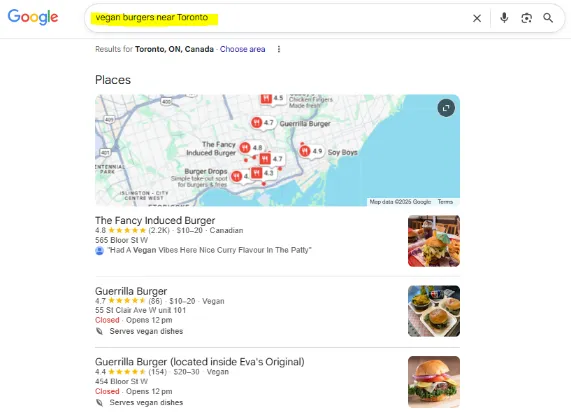
Insider tip: Use long-tail keywords and hyper-local phrases (e.g., “vegan burgers near Toronto”, “how to assemble a camping tent 2025”) to increase relevance and drive better engagement.
Brands Leveraging Micro-Moments in Their Marketing Strategy
Leading brands across retail, travel, and fintech are turning micro-moments into measurable wins. They meet user intent instantly and convert attention into real-world results.
Below are some of the brands that built campaigns around micro-moment behavior and used intent data to stay ahead of user decisions:
1. Unroll.me
Working with Unroll.me, our 9AM experts created a powerful example of capturing the user's need for an immediate solution in a few short seconds.
The campaign is a clever “I-want-to-do” play that speaks directly to the user's pain point. The TikTok ad opens by showing a series of overwhelming, messy inboxes, establishing the problem instantly ("If your inbox looks like this..."). The solution, "you can use Unroll.me," is delivered immediately as the tool for the task: "Unsubscribe from junk and treat your inbox like a temple."
This quick-hit format drove high engagement by giving users the answer they needed right as they were scrolling.
2. Dockers
We partnered with Dockers on a mobile-first campaign that became a standout success. It delivered an 8X lift in organic views through mobile-first, micro-moment-driven creative.
The campaign focused on an “I-want-to-buy” moment and captured attention in under 3 seconds. The UGC ad opened with the hook, “Your closet just got a promotion,” followed by a quick product demo and bold styling visuals.
This mobile-first format drove a measurable lift in click-through rates and lowered cost-per-acquisition across paid social.
Why it works: People shop fast: they scroll vertically, often with the sound off, and want to buy now. That’s why the ad was designed to be vertical, sound-optional, and CTA-first, delivering the kind of instant experience Google recommends.
To keep the sale, ensure your product pages are lightning-fast and mobile-friendly, so you don't lose momentum between the tap and the checkout.
3. Booksy
For Booksy, our creator-led TikTok campaign nailed the “I-want-to-do” micro-moment by addressing a universal pain point: salon owners overwhelmed by late-night client texts.
The influencer-led video felt authentic and showed how Booksy automates bookings and messaging in seconds.
The nine-second pace, in-app demo, and conversational tone reflected how business owners search for quick, actionable fixes on mobile. By solving a real frustration fast, Booksy turned stress into a measurable surge in conversions and brand trust.
4. Hopper
Our work with Hopper demonstrates a textbook “I-want-to-know” moment that turns flight data into instant visual clarity. This approach reduced CPA while avoiding ad fatigue.
The video opens with the line “Secret travel hack”. The influencer explains how Hopper’s color-coded grid (in red, yellow, and green) reveals when to book for the lowest price, which is a perfect fit for travelers seeking quick, reliable answers.
The demo ends with a reward hook, Carrot Cash credit on each booking, which builds a micro-reward loop. Its 15-second format, conversational tone, and fast visual payoffs make price prediction feel effortless and actionable. This structure drives strong engagement on mobile.
5. KFC
KFC’s TikTok is a strong example of an “I-want-to-go” moment in action. It opens with a UGC-style rating (“172573/10 recommend 🔥”), cuts to the drive-thru sign, and ends with a close-up bite; an instant craving trigger.
The caption “We took a trip to KFC” converts craving into intent in seconds. Its short runtime, native text overlays, and handheld framing make it ideal for spur-of-the-moment visits.
If you’ll use this type of micro-moment, pair your creative with your Google Business Profile, local pins, and “Order/Drive-Thru near me” CTAs to capture searches and route viewers to the closest store.
@carson.roney #ad This KFC fried chicken sandwich got me feeling like..💃🏼 Go snag one at your nearest KFC🤩 #ad #trythekfcsandwich ♬ OffendedRemixChallenge - Realremzo
How to Find Hidden Intent Behind Every Search
Next, we dig deeper into uncovering hidden search intent and act on it for smarter targeting.
How to Build a Data-Driven Framework for Intent Discovery
Semantic search rewards clarity. Schema types, such as Product, FAQPage, and LocalBusiness, tell engines what your page is about, so answers surface as rich results, which is ideal for micro-moments. Voice and conversational queries amplify this.
DemandSage found that voice search is no longer niche: about 20.5% of global users now make voice queries, and many of these use conversational phrases.
Rather than siloing by keyword, you should organize content into topic clusters (e.g., a “running shoes” hub linking to landing pages on trail, waterproof, and budget options), so the whole set ranks together and users land on the most specific answer first.
This builds topical authority, serves varied intent, and aligns with how modern search engines understand content contextually. And that’s how visibility becomes action.
How to Use Analytics and AI to Predict Customer Intent
Begin with a four-stage framework to predict intent:
Discover → Diagnose → Design → Deliver.
Start by discovering what people want; track actions like clicks from search, how far they scroll, or when they start adding to the cart. Tools such as Google Analytics 4 or a Customer Data Platform (CDP) like mParticle pull those signals together in one view.
Next, diagnose what the data means. If someone hovers over product details, clicks through from mobile search, and starts checkout, all in one session, they’re showing strong buying intent.
Then, design your creative and landing pages to match that behavior. Maybe it’s a fast-loading page with a one-click CTA for high-intent users.
Finally, deliver that experience at speed using AI-powered ad platforms such as Meta Advantage+ or Google’s AI-driven campaigns, which automatically tailor messaging and offers in real time.
According to Keevee (2025), real-time personalization can lift conversion rates by up to 35%. This shows that getting the right message in front of the right user at the right second pays off.
The Power of Data: Using Analytics to Predict Micro-Moments
Combining Google Analytics 4 with your customer data platform lets you analyze signals like scroll depth, hovers, and cart starts to understand what your visitors intend to do.
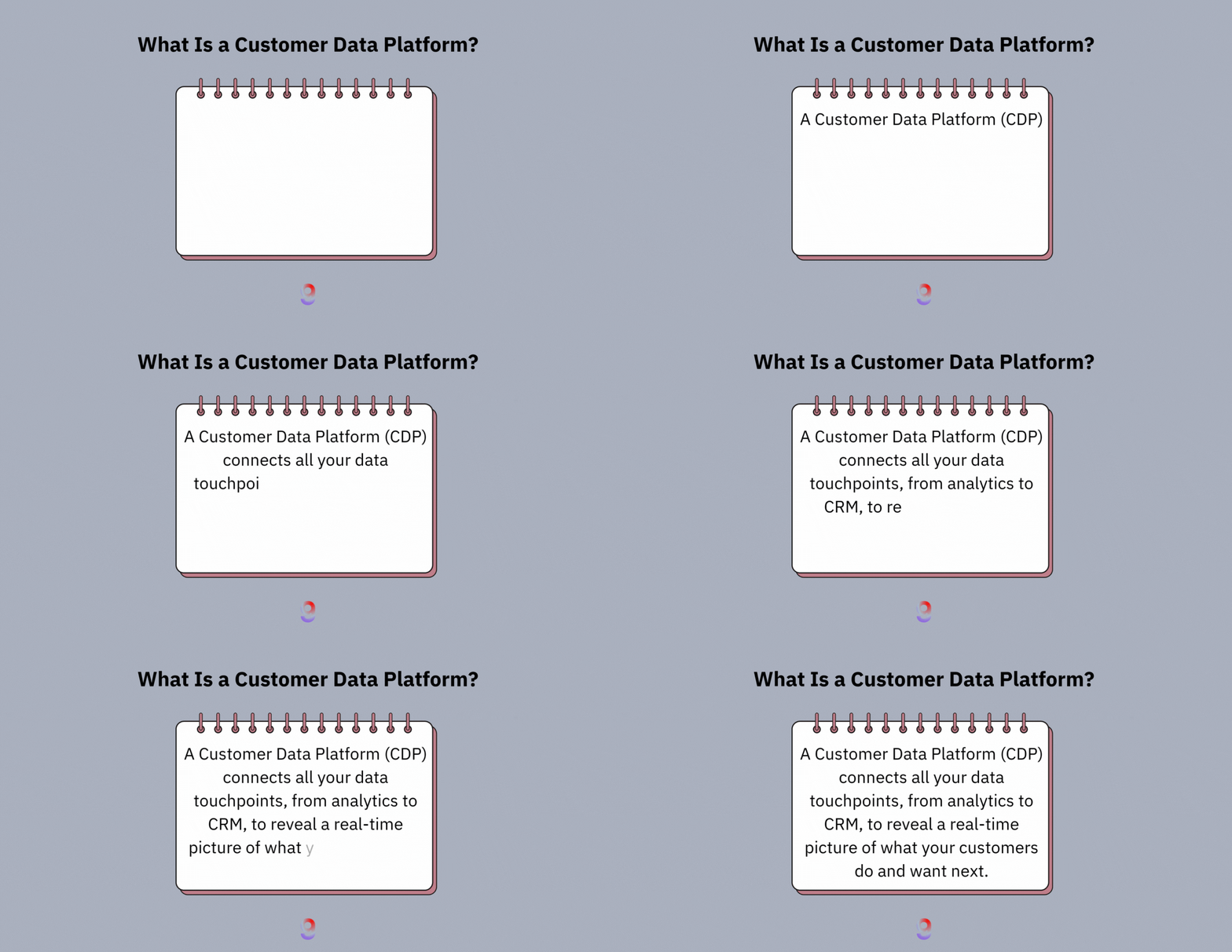
When these signals indicate a spike in intent, automate a matching response; be it a reminder, a price-drop nudge, or a “near-me” pickup option.
That’s the difference between reporting on user behavior and responding while it’s happening.
How to Design Fast, Frictionless Mobile Experiences
When every moment counts, the goal is to build a mobile experience engineered for speed and clarity.
Why Mobile Optimization and Accessibility Drive Better Conversions
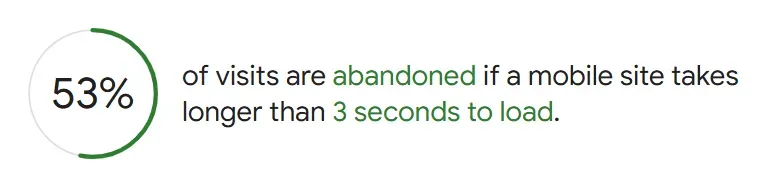
Mobile optimization directly affects performance. A delay of just one second in page load time can reduce conversions by up to 7%. Meanwhile, over 53% of mobile visitors abandon a page if it takes longer than 3 seconds to load.
Google’s Core Web Vitals shows the impact of these on your ranking and return visits. Using a content delivery network like Cloudflare, compress images, ship less JavaScript, and test against mobile first. Then, run an accessibility checklist (contrast, alt text, keyboard flow, etc).
Faster pages bring people in, and accessible ones keep them. Both raise your odds of conversion.
How to Write Mobile Content That Converts Fast
With users scrolling at speed, short-form content wins. On mobile, keep your copy under 300 words, lead with benefit-driven headlines, and use one clear CTA.
Your micro-copy matters, so it must mirror intent using words like “Pick up today,” or “Book in 30 seconds.”
Place the primary action before the first scroll and provide value to the visitor at a glance. To get the most insights, measure tap heatmaps to keep only what earns attention.
How to Capture Local Search Intent and Drive In-Store Visits
With a focused local-SEO and mobile-first strategy, you can convert online intent into foot traffic. Research supports this: 76% of mobile local searches result in a store visit within 24 hours.
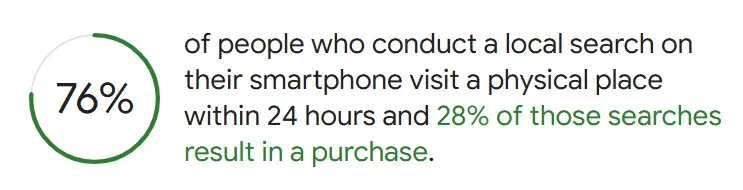
Capitalize on this and own your Google Business Profile (including hours, photos, and menu/inventory), and add LocalBusiness/Store/Offer schema so that assistants and SERP modules can surface you.
Next, pair “near me” ads with map pack placement and click-to-call.
Then, geotag conversions so you know which creative actually moved feet into your business.
Advanced Micro-Moment Tactics You Should Follow
Discover next-level tactics, using predictive AI, cross-device design, and voice-driven UX, to turn fleeting interactions into lasting conversions.
How Predictive AI Makes Marketing Feel Personal
Predictive AI helps your brand stop guessing and start anticipating what customers actually want.
Here’s how that plays out: platforms like Google Ads’ Performance Max or Meta Advantage+ tailor creative to the moment, be it search query, location, or recency, so the right variant appears without needing to be created from scratch.
Their automation tools swap in adaptive copy (for example, “Still eyeing those red high heels?”) and redirect visitors to a dynamic landing page that shows them the exact product in stock nearby.
How to Turn Small Interactions into Big Conversions
Small actions, like tapping “add to wishlist,” watching a quick product video, or scrolling just a bit further, are helpful signals that predict purchase.
To track these subtle signs, use Google Analytics and integrate tools such as Mixpanel and Hotjar. Then, tailor your landing pages.
For example, if a visitor hovers over product details on your site, show them a one-click “Buy Now” or a “Limited Stock” badge to incentivize them to add to cart.
How to Deliver Seamless Experiences Across Devices and Channels
In an omnichannel world, your customers are bouncing from their phones to their tablets to their laptops, and they expect you to recognize them on every platform.
If their experience feels fragmented or repetitive, you break their buying journey and lose the sale.
To fix this, we use tools like Google Analytics cross-device tracking and a CDP (Customer Data Platform) to stitch together their user IDs. This visibility helps us see where users are and time our messages perfectly.
Timing means coordinating the order of your communication. For example, sending a social post, followed by a relevant search ad, then a tailored email. This sequence ensures the user sees the same offer and creative promise as they hop between devices.
This results in the user clicking a mobile social ad, tapping "add to cart" later via their tablet, and then easily paying on their desktop; all because your messages flowed seamlessly and were delivered at the moment they mattered most.
The Future of Micro-Moments: AI, Voice, and Predictive UX
Reactive marketing is fading fast. Now, it’s all about being one step ahead with AI-powered, micro-moments that anticipate user needs and actions.
Today, voice queries (“open now,” “near me”) and predictive patterns mean your content must be machine-readable.
Regarding this, schema helps assistants understand you, while fast mobile design helps users choose you.
Generative assistants will pick winners that answer quickly, locally, and clearly. So build for both.
Research shows that marketing campaigns using predictive analytics are 1.8X more likely to exceed shared goals and 2.9X more likely to drive revenue growth.
Read Next: The Future of Advertising: From Attention to Action.
The Metrics That Show You’re Winning in the Moment
Next up, these metrics prove that you’re truly capturing intent.
How to Keep Improving as User Behavior Evolves
The numbers you track matter, and the quicker your response, the better. Focus on metrics like click-through rate, scroll depth, page load time, and conversion rate because they signal changing intent.
A recent study found that by analyzing the way users click and navigate a site, we can predict conversions much more accurately, from 75% to 81.5%.
This improved accuracy is a game-changer because better prediction models help you spot customers ready to buy much earlier, allowing you to make smarter, more profitable decisions.
| Metric Change | What It Reveals | Business Impact |
|---|---|---|
| Load time increases | Poor user experience and higher bounce rates | Lower conversions |
| Load time decreases | Smoother navigation and faster access | Higher conversions |
| Scroll depth increases | Greater engagement and interest | Higher conversion likelihood |
| Scroll depth decreases | Weak engagement and low content relevance | Lower conversion likelihood |
| Click-to-call actions increase | Strong purchase intent and trust | More store visits or sales |
| Click-to-call actions decrease | Falling intent or poor clarity in CTA | Fewer store visits or sales |
Side note: Learn how to scale efficiently without overspending in Scale Without Spiking CAC Using Guardrail Metrics.
The Role of Micro-Moments in Building Long-Term Customer Loyalty
Those tiny, intent-rich touchpoints; quick answers, one-tap buys, and location-based offers are small wins that, over time, stack up into meaningful customer loyalty.
The proof is in the results: Customers who experience these seamless, quick journeys show a significantly higher Customer Lifetime Value (CLV), according to M Accelerator.
Side note: For a deeper look at modeling that value, don’t miss CAC Payback and LTV Modeling That Finance Will Trust.
When you consistently meet a customer’s needs right when they have them, you quickly build engagement and trust; and that’s what ultimately drives conversations.
To turn these moments into lasting brand relationships, use your data tools (like your customer data platform and heatmaps) to spot high-intent actions (like tapping a wishlist or checking a nearby store).
Then, follow up with tailored messages that focus on being helpful, not just making a sale.
Continuous Optimization: Adapting to Evolving Behaviors and Trends
In a world where user behavior is constantly shifting, you need to optimize continuously and not leave it to the campaign phase.
Optimization is a loop where you must measure → test → refine; especially in a world where user behavior is constantly changing.
As part of your process, use machine learning to rotate your creatives before fatigue hits, shift budgets toward better-performing segments, and cut waste.
Also, connect Google Analytics with your customer data platform so you can identify rising intent signals such as surges in product searches or add-to-cart events, and launch same-day creative or landing page updates.
For your brand to win, you need to be the fastest to learn and adapt.
Side note: Fast, future-proofing brands also adapt to data privacy shifts. See how marketers are preparing in our guide, The Cookie-Less Future: How to Win in a Privacy-First World.
Partner With 9AM to Win in the Blink of an Eye
In a world where 53% of users abandon sites that take over three seconds to load, and nearly 80% of consumers have made a purchase on their smartphones in the past six months, your success online depends on speed, precision, and empathy.
Because every tap or scroll can redefine your brand’s future.
At 9AM, we turn fleeting attention into measurable action by using data-driven creative, real-time optimization, and mobile-first experiences that convert micro-moments into lifetime value for your brand.
So don’t wait for attention; capture it. Book a strategy call with 9AM today and start turning your brand’s fastest moments into its biggest wins.
Frequently Asked Questions
- What is the rise of micro-moments?
The rise of micro-moments reflects how consumers, particularly mobile-first behavior audiences, turn to their devices in split seconds of intent to find an answer, go somewhere, do something, or buy now. These shifts demand fresh digital strategies, optimized user experience, and real-time responsiveness.
- What metrics can marketers use to measure success in capturing intent during micro-moments?
Key metrics marketers can use include scroll depth, hover time, time-to-action, mobile conversion rates, and assisted micro-conversion events (e.g., taps, store-locator clicks). These metrics provide insight into which segments of your customer base you’re reaching with intent-driven interactions.
- What is the power of micro-moments?
Micro-moments give you the chance to meet your customer exactly when they’re ready, yielding higher conversion rates, stronger brand communities, and deeper brand loyalty. By capturing these tiny touchpoints, you align your brand communication with real-time consumer behaviour and smash traditional funnel models.
- What are the four kinds of micro moments?
The four types of micro-moments are:
- I-want-to-know: Research or discovery moments
- I-want-to-go: Location-based or nearby intents
- I-want-to-do: How-to or action-driven queries
- I-want-to-buy: Immediate purchase-intent interactions
Tailoring your content, landing pages, and search ads to each moment type improves relevancy and conversion.
- What are micro moments in consumer behavior?
In consumer behaviour, micro-moments represent those split seconds when intent transforms into action, often via a mobile device. These moments are now critical decision points in the buyer journey and shape everything from local SEO to ad copy, product details, and customer insights.